How to Create a Sensory Room at Home (DIY vs Hire)
A sensory room isn’t about fancy equipment or copying therapy spaces at home. What actually helps is understanding how light, noise, clutter, and layout affect your nervous system throughout the day. Many people can get relief with simple DIY changes. Others need guidance when overwhelm is constant or shared across a household. Sensory support works best when it reduces daily strain, not when it adds more stuff, rules, or pressure.
The idea of setting up a sensory room at home may seem easy. One common misconception about it is that turning down the lights and putting in a few peace-giving items would suffice.
However, this is not always the case for sensitive, overwhelmed, or neurodivergent people and families. The environment might appear more peaceful, but it may not be enough.
That’s because sensory regulation is not about copying therapy rooms or filling a space with tools. It’s about understanding how your nervous system responds to light, sound, movement, and visual input throughout daily life, and knowing when small, thoughtful DIY changes are enough and when expert guidance can prevent frustration, wasted money, and additional overwhelm.
This article explains what actually helps, what you can realistically do on your own, and when working with a sensory consultant can make a meaningful difference.
Why “Sensory Room” Advice Often Misses the Mark
Sensory overwhelm is far more common than most people think. According to the Centers for Disease Control and Prevention, 1 in 6 children in the United States has a developmental disability, including ADHD and autism, both commonly linked to sensory processing differences.
It affects children, adults, and entire families, yet it’s often treated like a niche issue with a neat solution. Most advice makes it sound simple. Create a sensory room. Add calming items. Problem solved.
But for many people, that relief never really comes.
The truth is that most homes were not designed with sensitive nervous systems in mind. Overhead lighting is harsh. Background noise never stops. Visual clutter builds up without notice. Rooms don’t flow well. All of this takes a toll over time.
If you’re highly sensitive, neurodivergent, or already under a lot of stress, that daily strain adds up quickly. You may not even notice it happening. You just feel tired, irritable, or overwhelmed more often than you’d like. A sensory-friendly setup isn’t about getting everything right. It’s about removing what’s quietly making life harder.
What a Sensory Room Is
At its simplest, a sensory room is a space that helps the nervous system calm down. That’s it.
It does not have to be a full room. In many homes, it isn’t. It might be a corner, a chair by a window, or a few changes made to a room you already use every day. A sensory room works when it supports how a person actually feels and functions. It should help with settling, focusing, resting, or recovering from overload. It should adapt to the person, not force the person to adapt to it.
For many households, the most effective sensory support doesn’t look like a “room” at all. It looks like softer lighting in shared spaces. Less visual noise. Fewer competing demands on the senses. Spaces that feel emotionally safe to stay in, not just escape to.
That’s where real relief starts.
The Two Approaches: DIY Sensory Setup vs Professional Sensory Consulting
Not everyone needs professional sensory consulting. Many people can make meaningful improvements on their own. The key is knowing which changes are low-risk and effective to DIY and which situations benefit from expert guidance.
What You Can DIY Safely (and Effectively)
DIY sensory changes work best when the goal is gentle relief, not full environmental restructuring.
-
Adjusting Light
Lighting is one of the biggest sensory stressors in homes.
Simple DIY changes include:
- Turning off overhead lights when possible
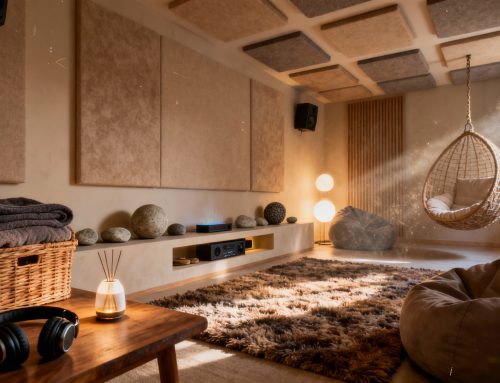
- Using table or floor lamps instead
- Choosing warm bulbs over cool or blue-toned LEDs
- Blocking glare from windows during peak daylight
These changes often reduce eye strain and nervous system fatigue almost immediately.
-
Reducing Noise
Sound overload is common, especially in shared homes.
DIY strategies include:
- Rugs, curtains, and soft furnishings to absorb sound
- Quiet background noise or intentional silence
- Noise-canceling headphones for focus or recovery
The goal is not silence. It’s control.
-
Supporting Comfort Through Texture
Certain textures help the body feel grounded.
Helpful options:
- Weighted blankets or lap pads
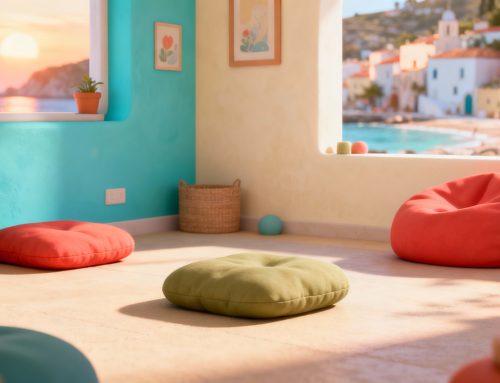
- Soft seating or floor cushions
- Familiar, comforting fabrics
These supports work best when they are optional, not forced.
-
Creating a Sensory Corner Instead of a Full Room
You do not need an entire room.
A sensory corner might include:
- A comfortable chair
- A soft blanket
- A lamp with warm light
- A sense of boundary or privacy
This works well in apartments or busy homes and avoids adding unnecessary clutter.
Where DIY Often Fails (and Creates More Overwhelm)
DIY approaches tend to break down in specific situations.
-
When Multiple Sensory Needs Conflict
One person needs quiet. Another needs movement or stimulation. Without guidance, DIY solutions can unintentionally increase tension rather than reduce it.
-
When Tools Become the New Trigger
Buying more items can create:
- Visual clutter
- Decision fatigue
- Pressure to “use everything correctly.”
For many sensitive people, less is actually more.
-
When Overwhelm Is Chronic or Trauma-Linked
If the nervous system is already operating in survival mode, adding stimulation, even calming stimulation- can backfire. In these cases, sensory regulation requires careful pacing and subtraction, not just additions.
-
When the Home’s Layout Is the Real Issue
Flow matters. So does sound travel. So does visual chaos across shared spaces. These patterns are hard to see clearly from inside the experience.
What a Sensory Consultant Does That DIY Cannot.
Sensory consulting is not interior design. It’s not therapy either. At Practical Sanctuary, sensory consulting focuses on translation, helping people understand how their nervous system interacts with their space and where small changes will have the biggest impact.
-
Sensory Profiling for Real Life
Instead of generic advice, consulting looks at:
- Sensory thresholds
- Overload patterns
- What drains energy versus restores it
This creates clarity before changes are made.
-
Whole-Home Sensory Mapping
Rather than focusing on one room, a consultant looks at:
- Light patterns across the home
- Noise movement
- Visual load
- Transitions between spaces
Often, one or two strategic shifts create more relief than an entire “sensory room.”
-
Nervous-System-First Prioritization
Not everything needs fixing.
Consulting helps answer:
- What matters most right now
- What can wait
- What should not be touched
This prevents overwhelm and wasted effort.
-
Family and Household Alignment
In shared homes, sensory needs often conflict.
Consulting helps families design solutions that respect everyone; without blaming, shaming, or forcing sameness.
-
Budget-Conscious Guidance
Sensory consulting does not involve:
- Furniture sales
- Renovations
- Product markups
The focus is on sustainable, low-cost adaptation.
DIY vs Hire: A Simple Decision Guide
DIY is usually enough if:
- You want calmer lighting or sound
- One person is affected
- The issue is situational or temporary
Consider professional sensory consulting if:
- Overwhelm affects daily functioning
- Multiple people are impacted
- You’ve tried DIY and still feel stuck
- You want clarity instead of more tools
Hiring help is not about doing more. It’s about doing less, more intentionally.
Why Sensory Support Should Extend Beyond One Room
Sensory overwhelm doesn’t happen in one place.
Your nervous system reacts everywhere; under bright kitchen lights, in echoing hallways, in bedrooms that never fully feel restful, and in work areas that blur into living space.
When only one room is designed for relief, the rest of the home can continue to drain energy all day long.
Regulation works best when support is ambient, not isolated. Softer lighting across shared spaces. Reduced noise throughout the home. Visual environments that feel calm to move through, not just calm to sit in. This is the core of Practical Sanctuary’s whole-home approach. Instead of creating one “safe room” inside an overwhelming house, the goal is to reduce sensory load across daily life so the nervous system has fewer reasons to stay on high alert.
Common Mistakes to Avoid When Creating a Sensory Room
-
Copying Therapy Rooms at Home
Therapy rooms are designed for short, guided sessions, not everyday living. Recreating them at home often adds bulky equipment without addressing ongoing sensory overload.
-
Buying Equipment Before Understanding Needs
Sensory tools are not neutral. Without clarity on what actually dysregulates or soothes the nervous system, equipment can quickly become clutter or another source of stress.
-
Treating Sensory Sensitivity as a Problem to Fix
Sensitivity is not a flaw. When it’s framed as something broken, the space becomes corrective instead of supportive, which can increase shame rather than relief.
-
Ignoring Adult Nervous Systems
Many sensory setups focus only on children. When adult needs are overlooked, overwhelm remains in shared spaces, and regulation becomes uneven across the household.
-
Overstimulating in the Name of Support
More lights, textures, and movement do not always help. For many people, the most effective sensory support comes from reducing input, not adding more.
Sensory Support, Without the Complexity
When sensory support is done well, you don’t notice it as a “system.” You just feel less worn down. Your body settles faster. Being at home takes less effort.
You don’t need to rebuild your space to get there. You don’t need a perfect sensory room or a list of things to buy. In most cases, what helps is understanding what in your home is quietly draining you, and what small shifts would actually make daily life easier.
Practical Sanctuary works with people who want their homes to feel more livable and less demanding. The work is virtual. It’s practical. It focuses on how real nervous systems respond to real spaces, not on aesthetics or upgrades.
FAQs:
Do sensory rooms work for adults, too?
Yes. Sensory regulation supports adults as much as children, especially those who are sensitive, neurodivergent, or chronically stressed.
Do I need a full room to create a sensory-friendly space?
No. Many effective sensory setups are corners or small zones integrated into daily life.
Are sensory rooms only for autistic individuals?
No. Anyone who experiences overwhelm, anxiety, or fatigue from their environment can benefit.
Can a sensory room replace therapy?
No. Sensory design supports regulation but does not diagnose or treat mental health conditions.
Is professional sensory consulting expensive?
Sensory consulting focuses on low-cost, sustainable changes and often prevents unnecessary spending on ineffective tools.

Stephanie Lee Jackson is the owner and founder of Practical Sanctuary, Sensory Interior Design.
Practical Sanctuary uses trauma-informed neuroscience to create spaces that help you focus, heal, emotionally regulate, and build community. Clients call it ‘space therapy.’
As a professional fine artist, Stephanie founded art spaces in New York and San Francisco, exhibiting her paintings internationally. As a massage therapist, she founded Practical Bodywork in Philadelphia, and taught Anatomy, Physiology, Pathology, and Advanced Massage Technique at Community College of Philadelphia.
Her book, The Eccentric Genius Habitat Intervention: Interior Design For Highly Sensitive People is both a manifesto on the need for sensory accessible, sustainable design, and a how-to manual for creating spaces that are tailored to your unique sensory needs.
Share This Story, Choose Your Platform!

Are you an eccentric genius?
You’re in the right place, darling.
In this free e-course, you will discover:
The ONE design mistake that NEARLY ALL HUMANS make in their habitats, and how to fix it in 15 minutes. (You will roll your eyes. And cry.)
Three senses your kindergarten teacher didn’t mention. (And how they make you a NINJA.)
The design trend which created an epidemic of shut-ins. (NOT COVID-19. Some of us now know the meaning of schadenfreude.)
Why Febreze is EVIL. (There should be a warning label.)
What kinds of light fixtures will be BANNED when the establishment comes to its senses.
What color has to do with hormones. (And how to leverage it–St. John’s Wort, piffle!)
What NEVER to do, ever ever, if you do not wish to induce psychosis, extreme depression, vertigo, or actual regurgitation in guests and members of your own family. (We all love those Bad Examples.)

Practical Sanctuary, sensory interior design, specializes in interior design for highly sensitive people.
We help you create spaces which are: