Interior Design for PTSD: How To Manage Anxiety
Last week, Brian had a panic attack in the middle of his design intake. This was good information. It helped us get started.
Brian and I are collaborating as part of his podcast, Traces of Trauma. As he recovers from severe PTSD, he’s exploring different modalities of healing, and sharing what he learns with his listeners. When we connected about an interview, he told me, “I think I need you more than you need me.”
So we are moving through a sensory design process together, and documenting what happens.
Panic attacks are the nervous system’s way of trying to keep us safe, after we’ve gone through more trauma than we’ve been able to process. When a person has PTSD, taking simple actions like decluttering a space can be fraught with triggers. Brian himself was surprised by how hard it was simply to let another person into his space and ask questions about it.
That’s why having non-judgmental support is such a crucial part of the sensory design process. Creating a mental and physical container for processing anxiety is the first thing we do–before changing layouts, picking room colors, or recommending furniture.
When Brian’s anxiety began to overwhelm him, I asked him where in the house he felt safest. When he was in his safe place, I asked him to bring his attention to the physical sensations of panic without fighting or judging them, and just experience them with me. After a few minutes, he reported that the sensations weren’t shifting, but that the emotional upset–the ‘charge’– was lessening.
After some more exploration, we were able to set a realistic goal of creating a place in the house where he felt safe, and bringing manageable amounts of clutter there to process it, instead of trying to declutter in the midst of his (physical and emotional) overwhelm. Over the next week, Brian reported that he was able to tackle a major problem area in the household and keep it clear.
Often when we find ourselves procrastinating over a seemingly simple task, that’s our clue that we are avoiding thing that trigger anxiety and trauma. Having a set of steps to acknowledge, manage and process our feelings can help us get un-stuck. When we’re working with clients, those steps are the foundation of the process.
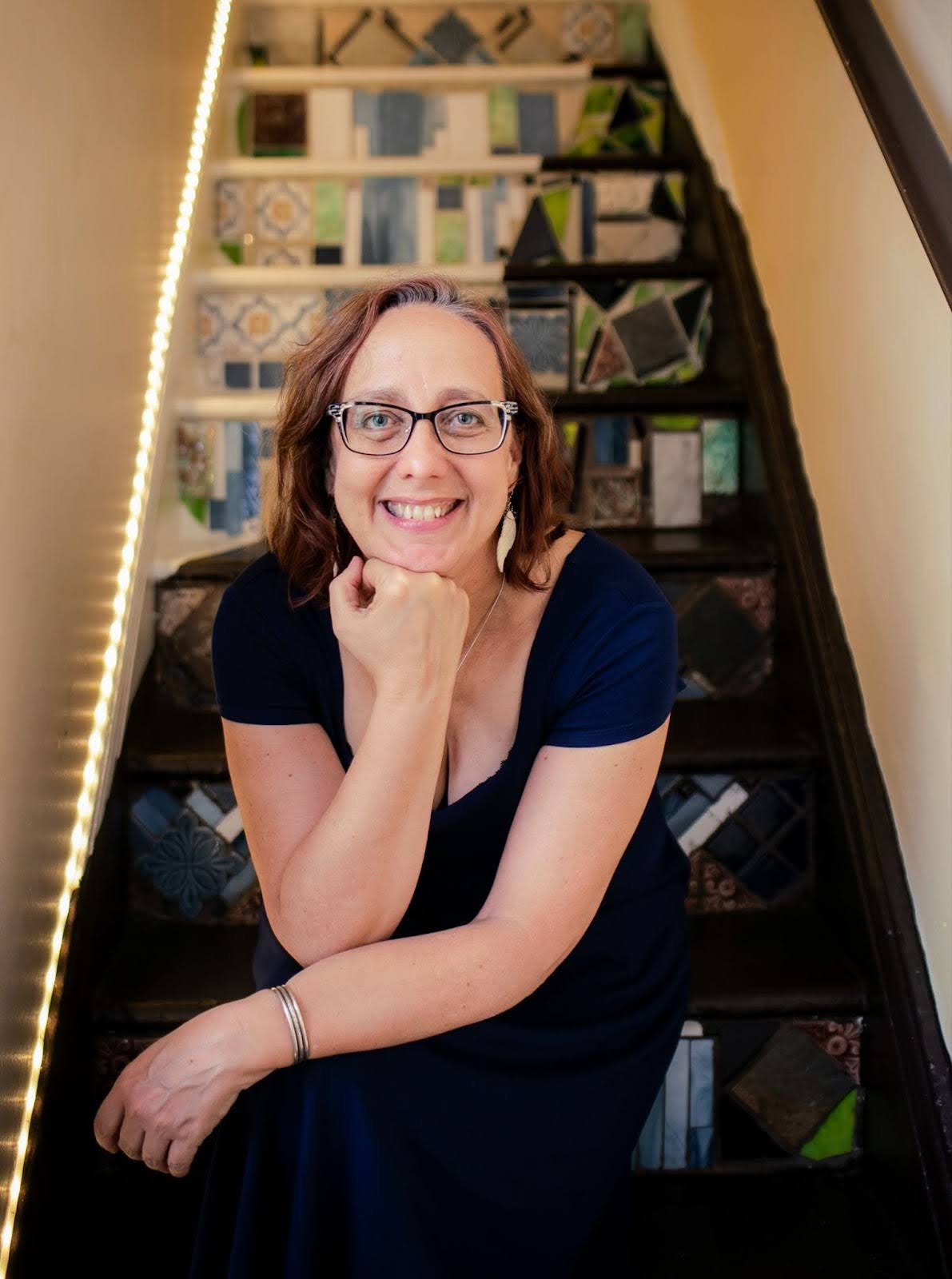
Stephanie Lee Jackson is the owner and founder of Practical Sanctuary, Sensory Interior Design.
Practical Sanctuary uses trauma-informed neuroscience to create spaces that help you focus, heal, emotionally regulate, and build community. Clients call it ‘space therapy.’
As a professional fine artist, Stephanie founded art spaces in New York and San Francisco, exhibiting her paintings internationally. As a massage therapist, she founded Practical Bodywork in Philadelphia, and taught Anatomy, Physiology, Pathology, and Advanced Massage Technique at Community College of Philadelphia.
Her book, The Eccentric Genius Habitat Intervention: Interior Design For Highly Sensitive People is both a manifesto on the need for sensory accessible, sustainable design, and a how-to manual for creating spaces that are tailored to your unique sensory needs.
Share This Story, Choose Your Platform!



Are you an eccentric genius?
You’re in the right place, darling.
In this free e-course, you will discover:
The ONE design mistake that NEARLY ALL HUMANS make in their habitats, and how to fix it in 15 minutes. (You will roll your eyes. And cry.)
Three senses your kindergarten teacher didn’t mention. (And how they make you a NINJA.)
The design trend which created an epidemic of shut-ins. (NOT COVID-19. Some of us now know the meaning of schadenfreude.)
Why Febreze is EVIL. (There should be a warning label.)
What kinds of light fixtures will be BANNED when the establishment comes to its senses.
What color has to do with hormones. (And how to leverage it–St. John’s Wort, piffle!)
What NEVER to do, ever ever, if you do not wish to induce psychosis, extreme depression, vertigo, or actual regurgitation in guests and members of your own family. (We all love those Bad Examples.)

Practical Sanctuary, sensory interior design, specializes in interior design for highly sensitive people.
We help you create spaces which are: