
Taste: Everyone Has It
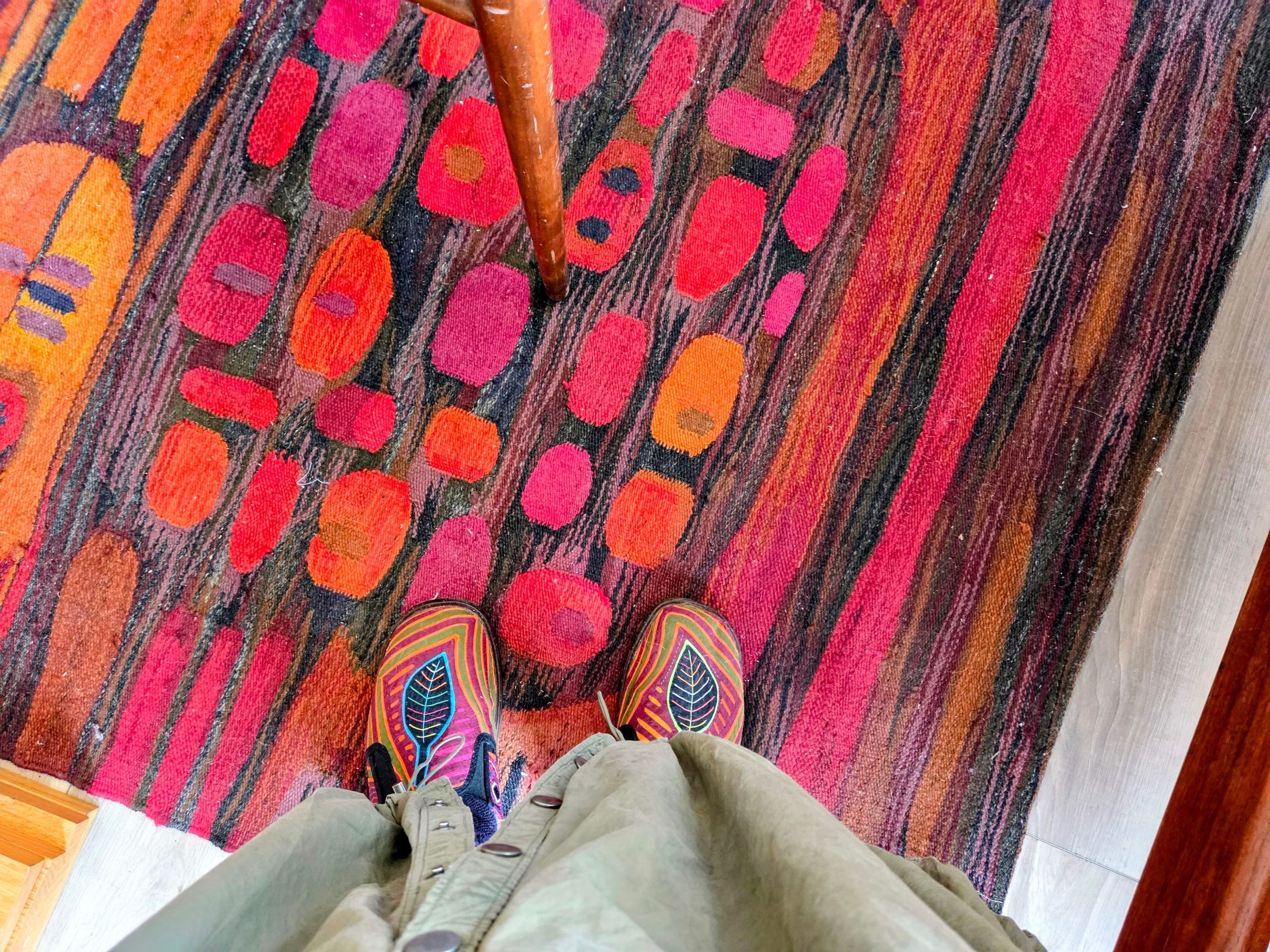
My toes are at home on this rug at The Modern Republic in Philadelphia. Shoes by Mabacol.
You’ve got taste.
I don’t say this to flatter you. Taste isn’t a skill; it’s part of your nervous system. When you look at an object, you have a feeling about it. You might not have words for that feeling; you might scrunch up your nose, or widen your eyes, or smile. There might be a warm, expansive feeling in your heart area, or a sinking in your gut.
Notice that feeling, and you’re done.
Your taste flows from your personality, your experience, your culture and your environment. These things don’t require an education in art or design. The only thing an education does is give you words to describe what your body already knows.
So why hire a designer?
Good question.
A designer’s job is to give your taste a voice. Putting objects together in a space so they sing is a different skill than knowing which objects you like. It’s perfectly possible to collect a room full of things that you love, and have the end result be less than thrilling.
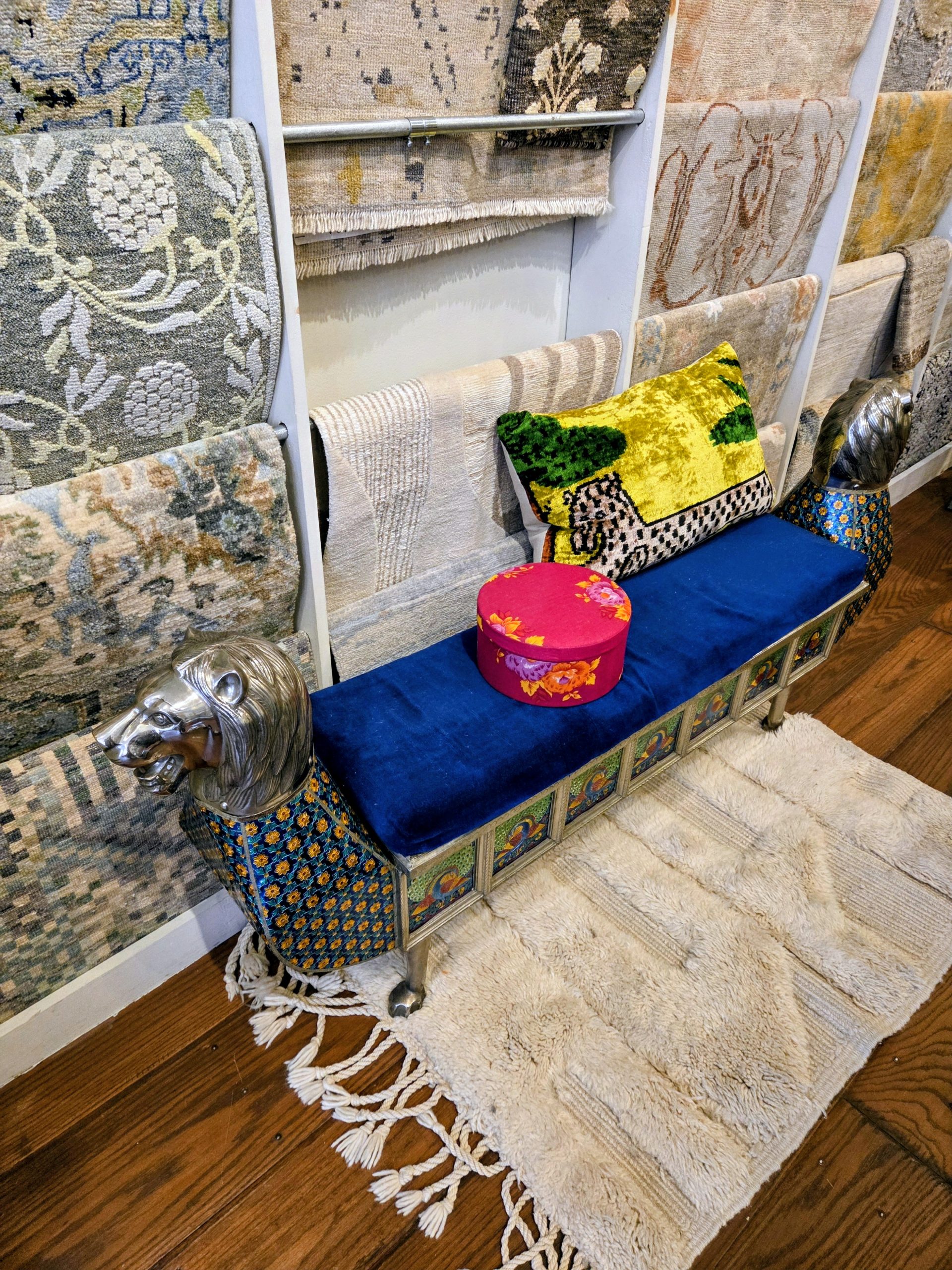
Whether or not you love this lion's head bench, it's living in a different universe than the rugs around it.
Your brain can only process so many bits of information in working memory at any moment. When you’re unfamiliar with design–say, because you’re busy figuring out a tricky coding problem, or working on a cure for cancer–you many not have the mental bandwidth to analyze why the lion’s head bench in the photo looks so uncomfortable next to all the furry beige rugs around it.
As a designer, I would point out that whatever your feelings about royal blue velvet and ornate enameled metal furniture, they’re speaking a different aesthetic language than beige shag rug. They’re not different enough to provide visual tension, and not similar enough to harmonize. The result is a visual headache.
Design that Works
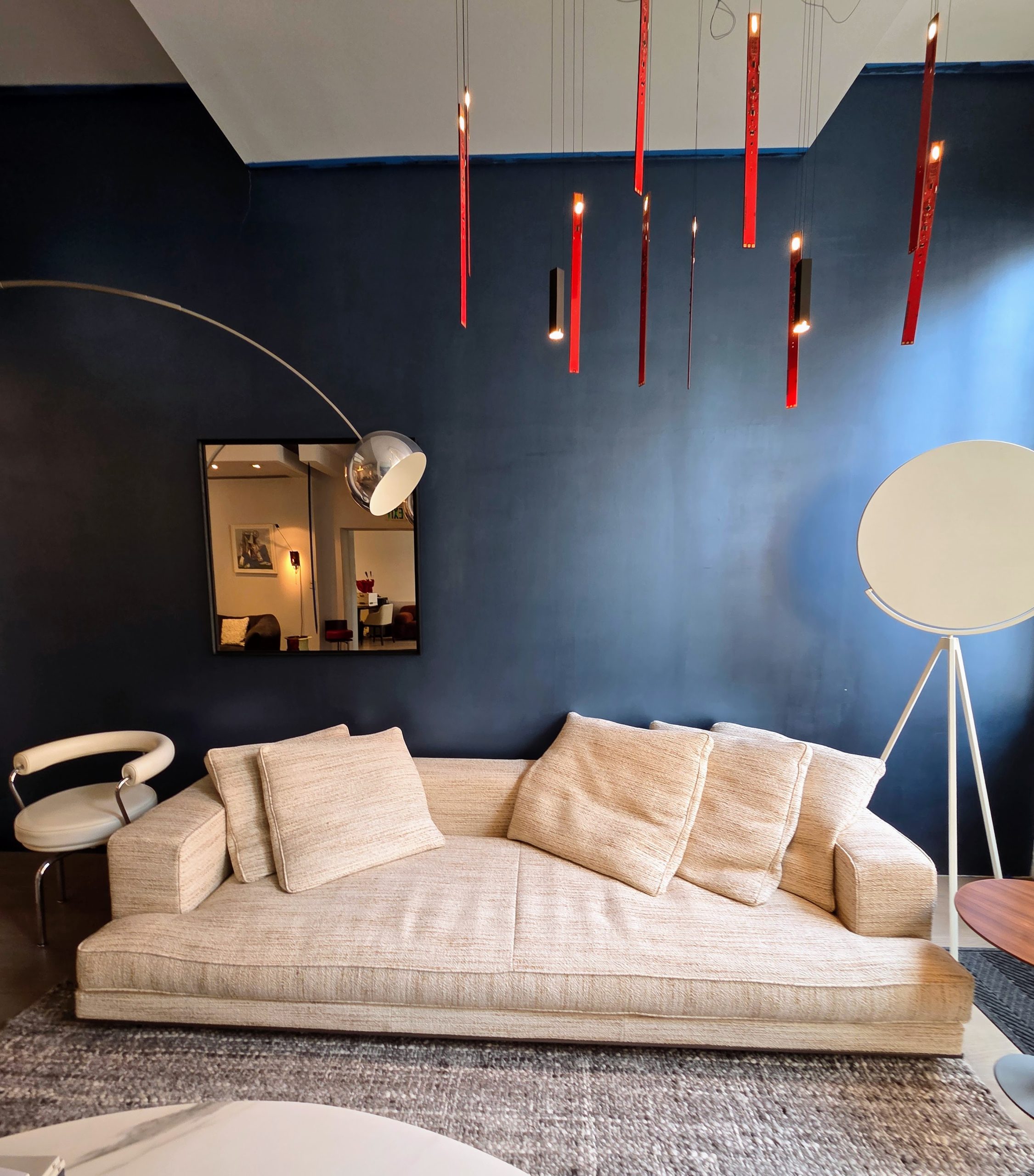
However you feel about Jetsons modernism, this room speaks a clear and coherent visual language. Photo from OCL Furniture and Lighting, Philadelphia.
For a room design to ‘work,’ every element must have a clear and coherent relationship to everything around it. In the photo above, the oatmeal couch contrasts with the navy accent wall behind it. The curves of the lamp, chair, tables and mirrors echo one another. The red chandelier pops out boldly, both with color and shape, balancing the whole composition.
You could put any of these objects in a different room, and you would not recognize them. It’s the relationships that create the feeling.
Curatorial Headaches
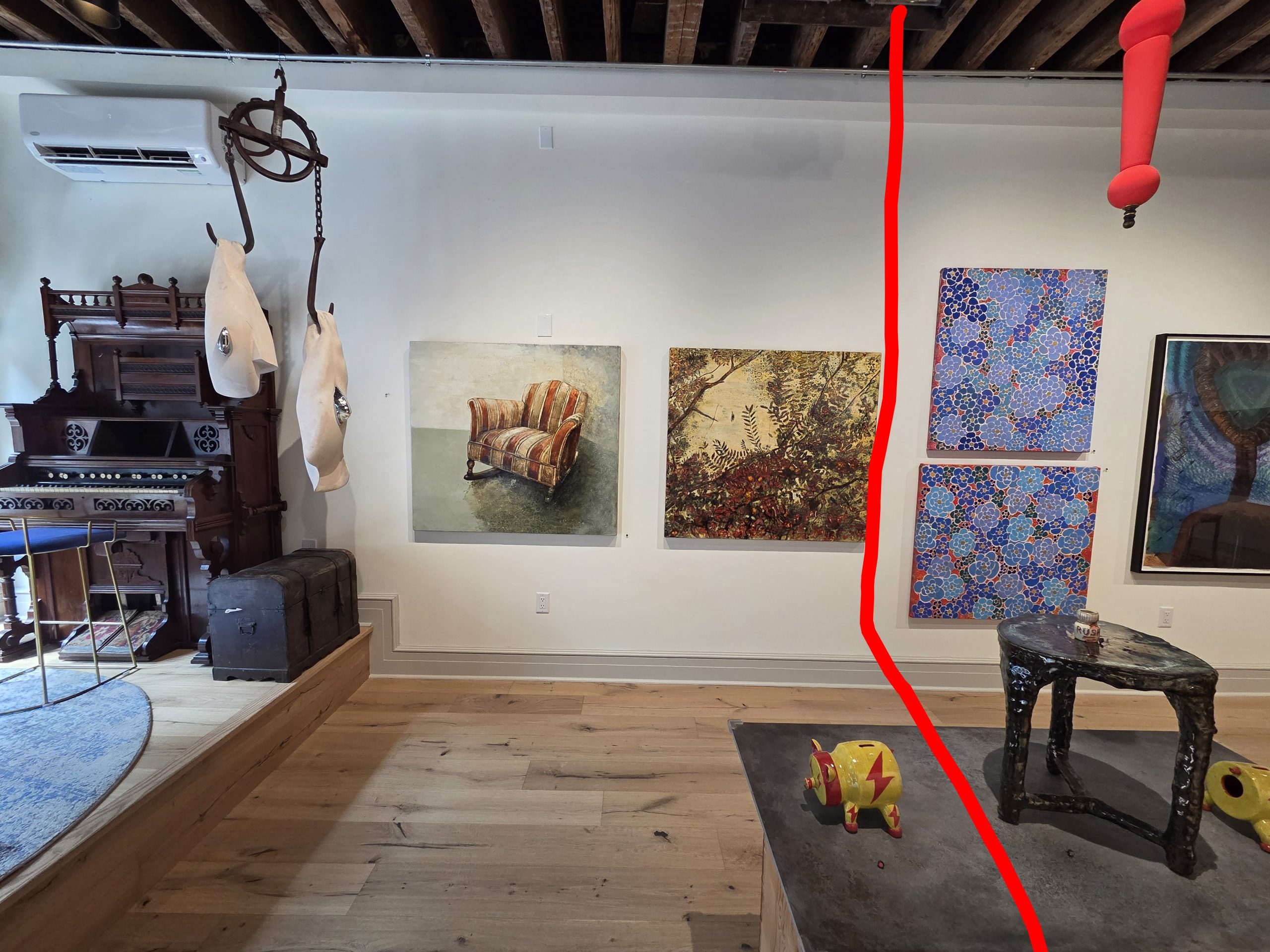
The red line marks the spot where there should be a wall. Two aesthetic universes that clash.
As a former gallery owner, my heart goes out to the artists at Curator Collective. It’s very hard to hang a group show so that everything harmonizes. In the exhibition view above, I drew the red line to indicate the boundary between two quarreling aesthetic universes. The muted tones of the two center paintings sit in easy conversation with the player piano and hanging sculpture; not so much with the vivid colors on the other side. In a perfect world, these would hang in different rooms.
This underscores my point: even artists can have a hard time seeing how their work functions in context. Artists don’t merely have taste; they’re creating it. Yet not every artist should be in charge of hanging their own work. It takes a designer to amplify their vision.

Share This Story, Choose Your Platform!

The Eccentric Genius Habitat Intervention
Your space, your nervous system.
Most of us were never taught how our bodies actually experience a room–the light, the sound, the layout, the smell–and what happens when those things work against us instead of for us.
This free seven-day course is a gentle introduction to sensory design. Each day brings one exercise–noticing what you feel, photographing what you’ve been editing out, dreaming about what you actually want. The exercises are all optional, and you can go as deep as you like.
By the end, you’ll understand more about why certain rooms drain you, what your body knows about your home, and how to start shifting without stressing out.
Sign up below. Your first email arrives within the hour.

Practical Sanctuary, sensory interior design, specializes in interior design for highly sensitive people.
We help you create spaces which are:

