
How Circadian Lighting Feeds the Teenage Brain
The overhead light switch sounded like a pistol shot, every high-school morning at 6AM. CRACK! Mom wielded that switch like a cattle prod. The alarm clock was worse–a noise seemingly engineered to be as violent as possible, heralding the start of another sleep-deprived day. It was literal torture.
We now know that teenagers have delayed circadian rhythms; their brains secrete melatonin later at night, causing them to stay up later and sleep in about two hours longer than adults. Adolescent brains need 9 hours of sleep to function and develop properly, and late nights plus early school schedules don’t allow for it. Doctors are starting to suspect that much adolescent recklessness, inattention, depression and low self-esteem may be attributed to chronic sleep deprivation.
Neither my mom nor my school knew this. They assumed that teenagers who buried their heads under their pillow at 6AM were just lazy and rebellious. The light and alarm weren’t neutral or kind; they were punitive.
Circadian Design for Adolescents
Some school systems are starting to address the needs of adolescent brains by having later start times for high school students. If you want to support your child’s sleep needs without punishment, you can help them design their space to support their circadian rhythms.
It’s easier than ever to set up circadian lighting in your home. Smart lighting hooks up to the wifi in your home, and can be controlled from a smartphone. You can program key lights in your house to brighten slowly with the sunrise, in blue shades to help the brain wake up gradually and naturally. In the evening, lights can shift to warm tones in order to help the brain relax, getting dimmer as bedtime approaches.
Different rooms can have different lighting to support what happens there. An office requires bright full-spectrum lighting to keep you awake and focused. The living room might need tiered lighting for reading, conversation and movie-watching. Bedrooms should be set up for sleep, which means as few screens–with their flickering blue-light frequencies–as possible.
The most important thing: don’t punish your teenager for their biorhythms. Affirming how they’re feeling can go a long way toward getting them to work with you to solve a problem, rather than fighting the alarm wars.
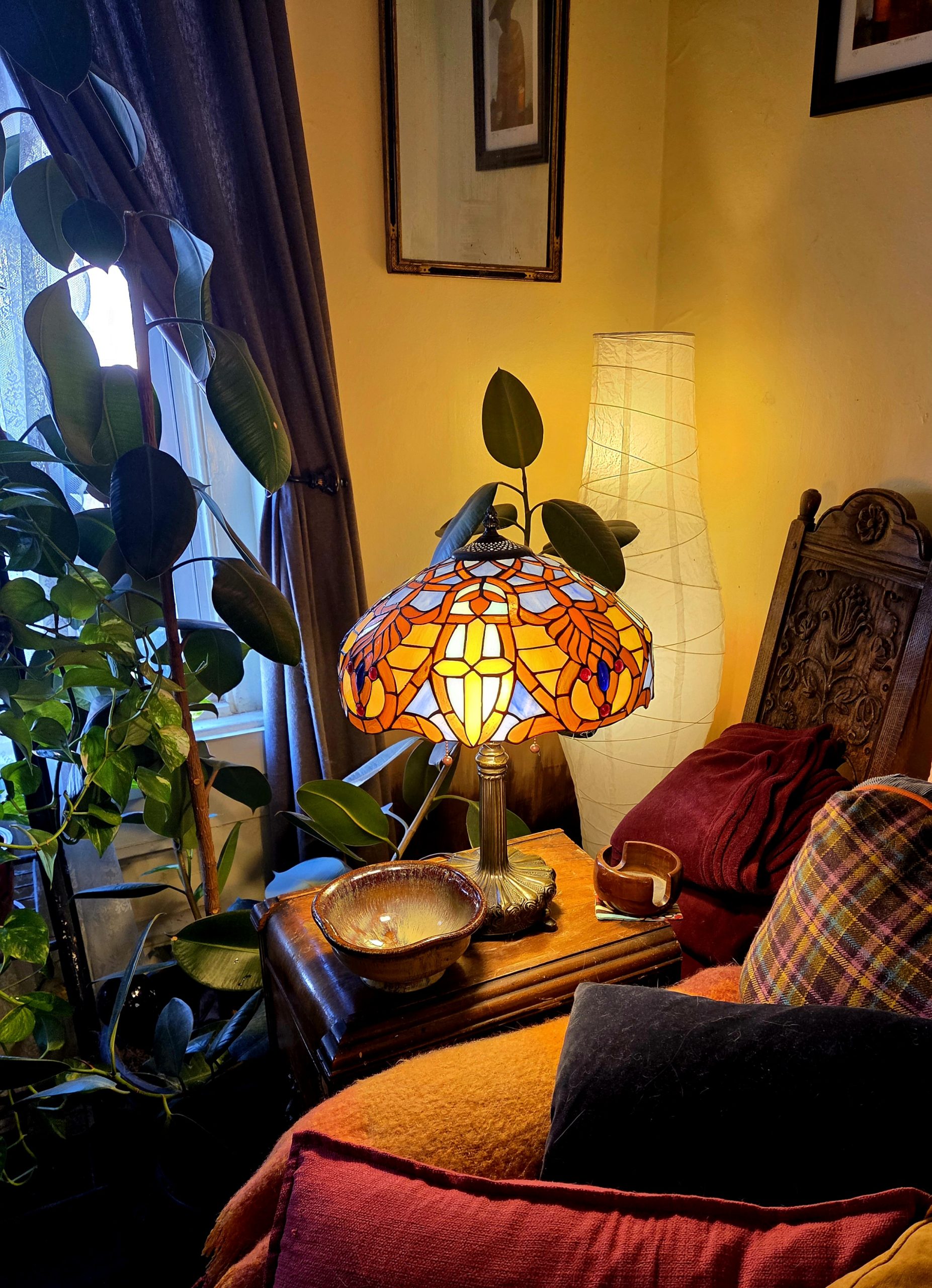
Tiered lighting in a reading corner. The lamp has programmable circadian light bulbs which brighten for reading and dim slowly at night. The windows have a layer of lace to filter the natural light, plants and a blackout curtain.

Share This Story, Choose Your Platform!

The Eccentric Genius Habitat Intervention
Your space, your nervous system.
Most of us were never taught how our bodies actually experience a room–the light, the sound, the layout, the smell–and what happens when those things work against us instead of for us.
This free seven-day course is a gentle introduction to sensory design. Each day brings one exercise–noticing what you feel, photographing what you’ve been editing out, dreaming about what you actually want. The exercises are all optional, and you can go as deep as you like.
By the end, you’ll understand more about why certain rooms drain you, what your body knows about your home, and how to start shifting without stressing out.
Sign up below. Your first email arrives within the hour.

Practical Sanctuary, sensory interior design, specializes in interior design for highly sensitive people.
We help you create spaces which are:

