
Sensory Dining Room
Dining Room
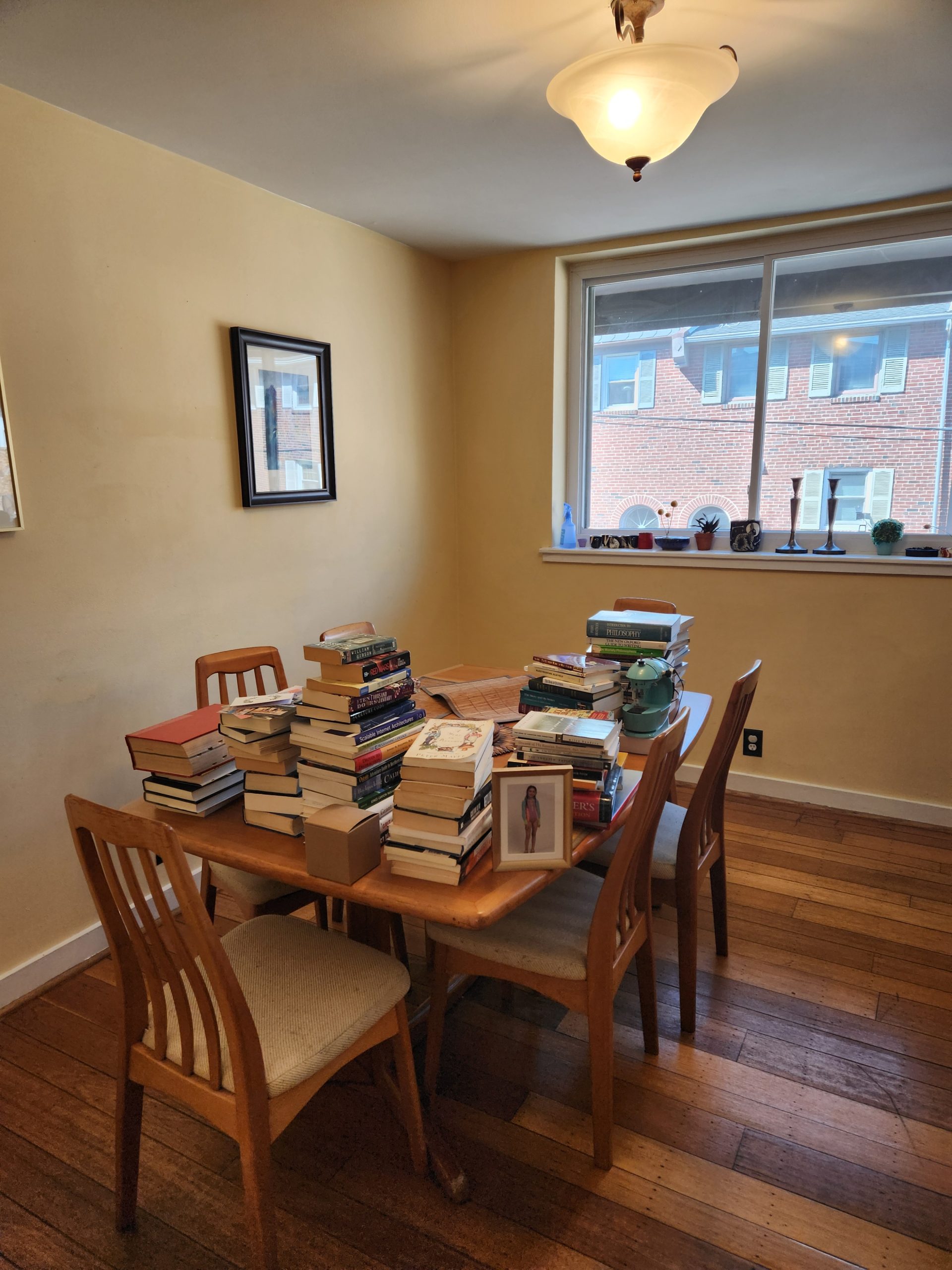
Before: dining room faces a noisy street. Sound reverberates off walls, floor and ceiling.
Dining Room Window After
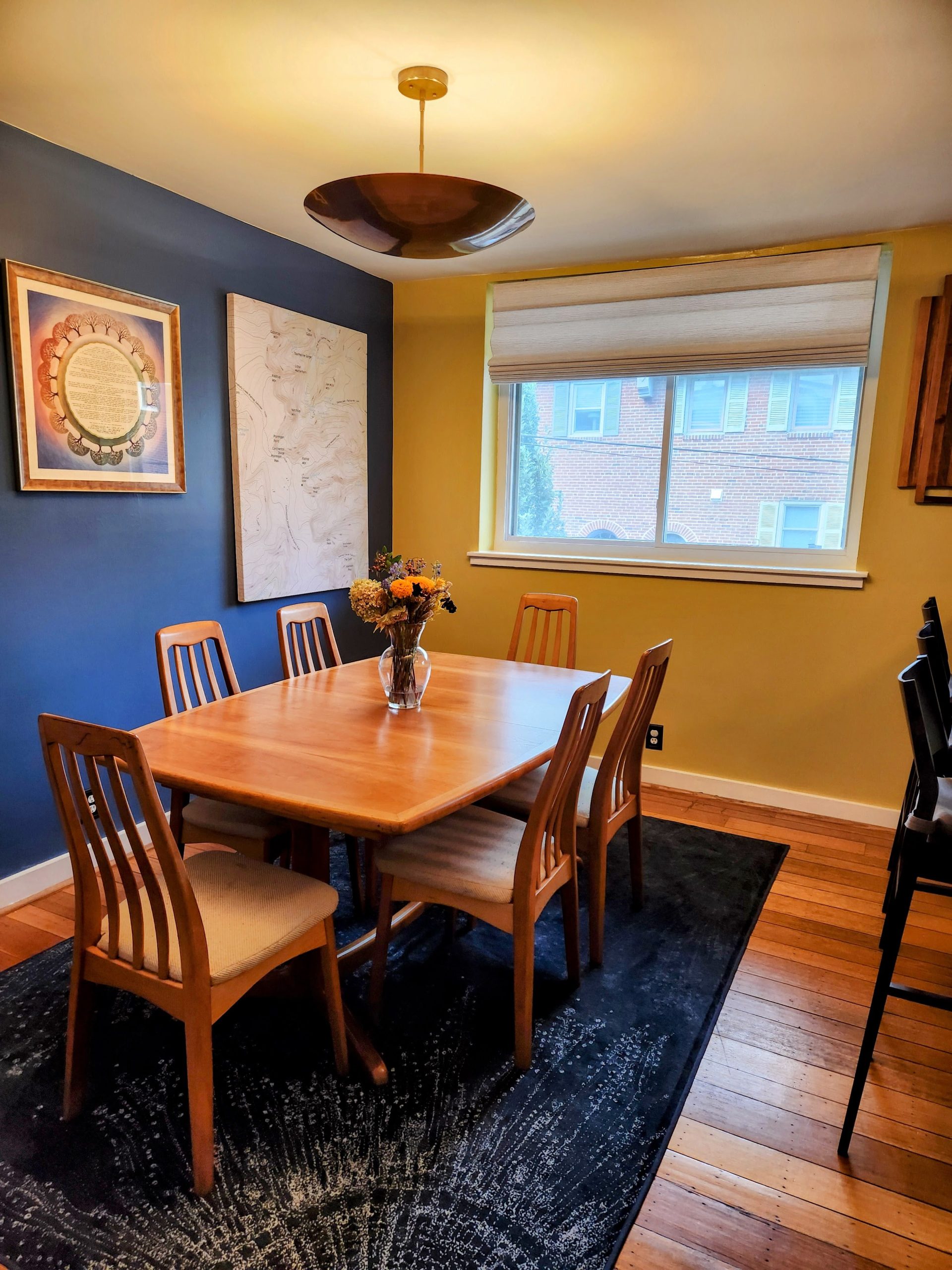
After: Sound buffering on windows, walls and floor, indirect lighting and warm colors transform the space. Artwork reflects the family's personal history.
When this Philadelphia family originally purchased their Society Hill home, it was on a relatively quiet street. Seventeen years later, it was no longer quiet. The uptick in street noise coincided with both parents moving to remote work, and the stress of acoustic chaos was taking its toll on the whole family.
During our initial consultation, we noticed that the family’s framed marriage contract–the ketubah, a beautiful work of art–was hanging in a location where it could not be read. We used it as the focal point of the dining room, where it informed the color and design decisions we made.
After swatch testing many different colors, we settled on a deep blue for the accent walls and a mustard shade which complemented the granite counters and wood floors. We selected a washable rug with a thick pad to absorb sound, in a pattern that echoed the circle of the ketubah.
Although the family likes to keep the windows uncovered for maximum light, we added Roman blinds for some sound baffling. Then we designed three large acoustic panels that doubled as artwork, using the family’s history as a guide.
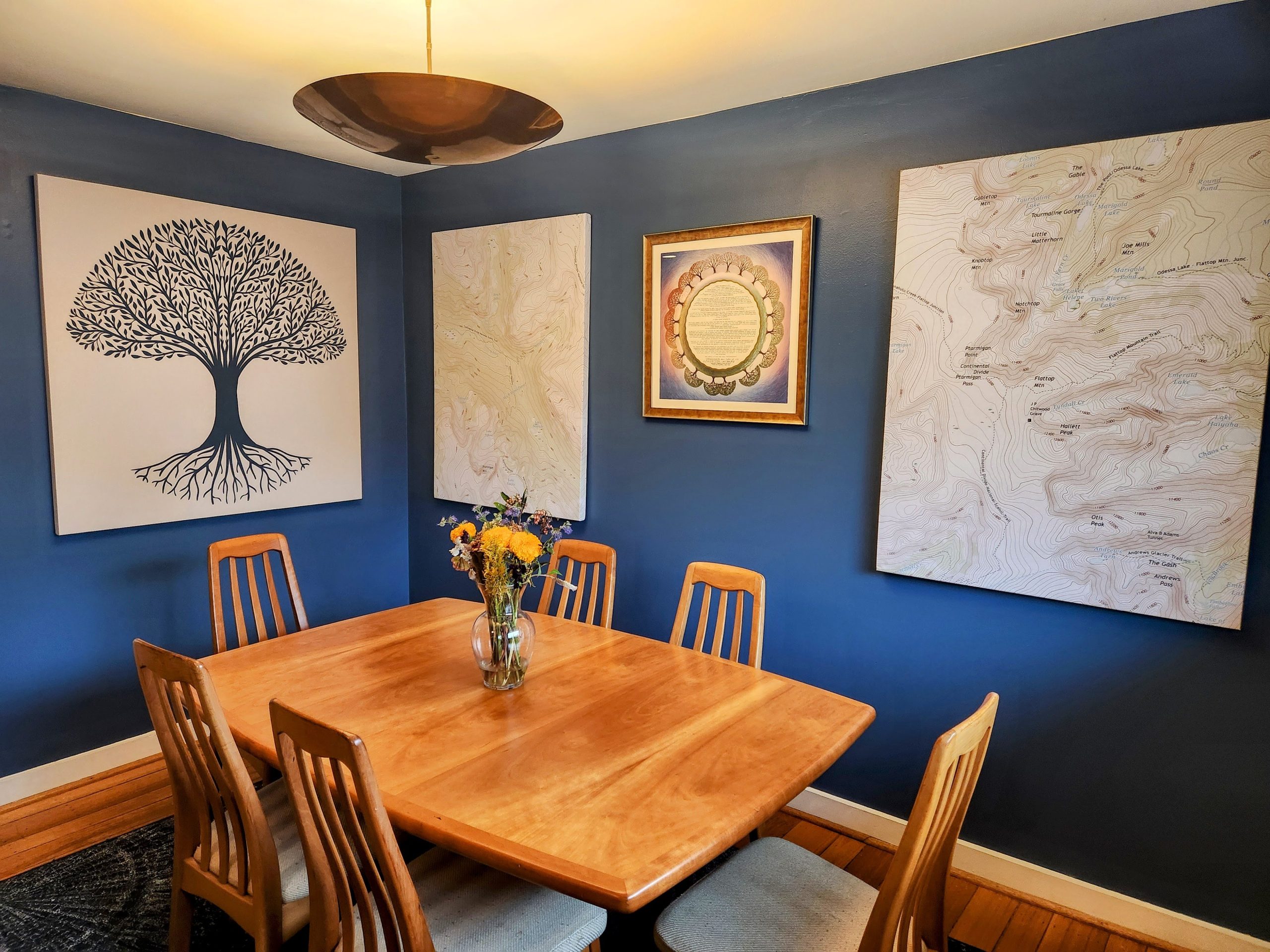
We created a tree graphic to continue the theme of trees in the ketubah. The couple became engaged while hiking in Colorado; they found a topographic map of the location, and edited it to print on the other two panels.
Finally, we swapped the ceiling fixture with one that directs light up and bounces it off the ceiling, eliminating glare.
The family reports that they spend twice as much time gathered around the dining table every evening, because it feels so good to sit there. This is the goal of sensory interior design–spaces that feel good physically, with visual cues that remind you of your unique superpowers.
Dining Room After
Indirect lighting, sound buffering and family symbology transform the dining room.
Case Studies in Sensory Interior Design
The Eccentric Genius Habitat Intervention
Your space, your nervous system.
Most of us were never taught how our bodies actually experience a room–the light, the sound, the layout, the smell–and what happens when those things work against us instead of for us.
This free seven-day course is a gentle introduction to sensory design. Each day brings one exercise–noticing what you feel, photographing what you’ve been editing out, dreaming about what you actually want. The exercises are all optional, and you can go as deep as you like.
By the end, you’ll understand more about why certain rooms drain you, what your body knows about your home, and how to start shifting without stressing out.
Sign up below. Your first email arrives within the hour.

